DOT Physical in Houston: A Practical Guide for CDL Drivers
What the DOT physical checks, what to bring and how to prepare if you have high blood pressure or diabetes. Walk-in, Spanish or English, north Houston.
A DOT physical is the health screening federal rules require before you can drive a commercial vehicle. It covers your eyesight, hearing, blood pressure, a urine sample and your medical history. If you meet the standards, you walk out with your DOT medical certificate at that same visit. Clínica Hispana Cruz 2 offers it walk-in, in Spanish or English.
What is the "medical card" everyone talks about?
Drivers rarely call it a "medical examiner's certificate." On the yard it's "the card," "the DOT" or "my physical." It is one document, and it says that on the day you were evaluated you met the health standards to operate a truck, bus or other commercial vehicle safely.
The card expires. Let it lapse and your commercial license can be affected, and your carrier can't dispatch you. Put the expiration date in your phone and come in a few weeks early instead of the day before.
Who has to get one?
The Federal Motor Carrier Safety Administration (FMCSA) sets the rules on who must be medically certified. The most common situations include:
- driving a vehicle rated over 10,001 pounds gross weight;
- driving a van or bus that carries a larger number of passengers;
- hauling hazardous materials that require placards;
- applying for a CDL for the first time.
Not sure whether your job falls under the rule? Your employer or driving school can tell you which license and certificate they expect before you come in.
What does the medical team check?
The clinic doesn't make up the checklist; the FMCSA does. The clinic's medical team works through those federal standards one by one:
- Vision: each eye is tested on its own and both together, with or without corrective lenses. Your side vision and your ability to tell traffic-light colors apart are checked too.
- Hearing: you need to hear a whispered voice at a set distance, or pass a test with an audiometer. If you drive with hearing aids, you're tested wearing them.
- Blood pressure and pulse: this is where drivers get surprised most often. A high reading doesn't always rule you out, but it can shorten how long your card is valid.
- Urinalysis: the sample is screened for sugar, protein and blood, which can point to kidney trouble or diabetes.
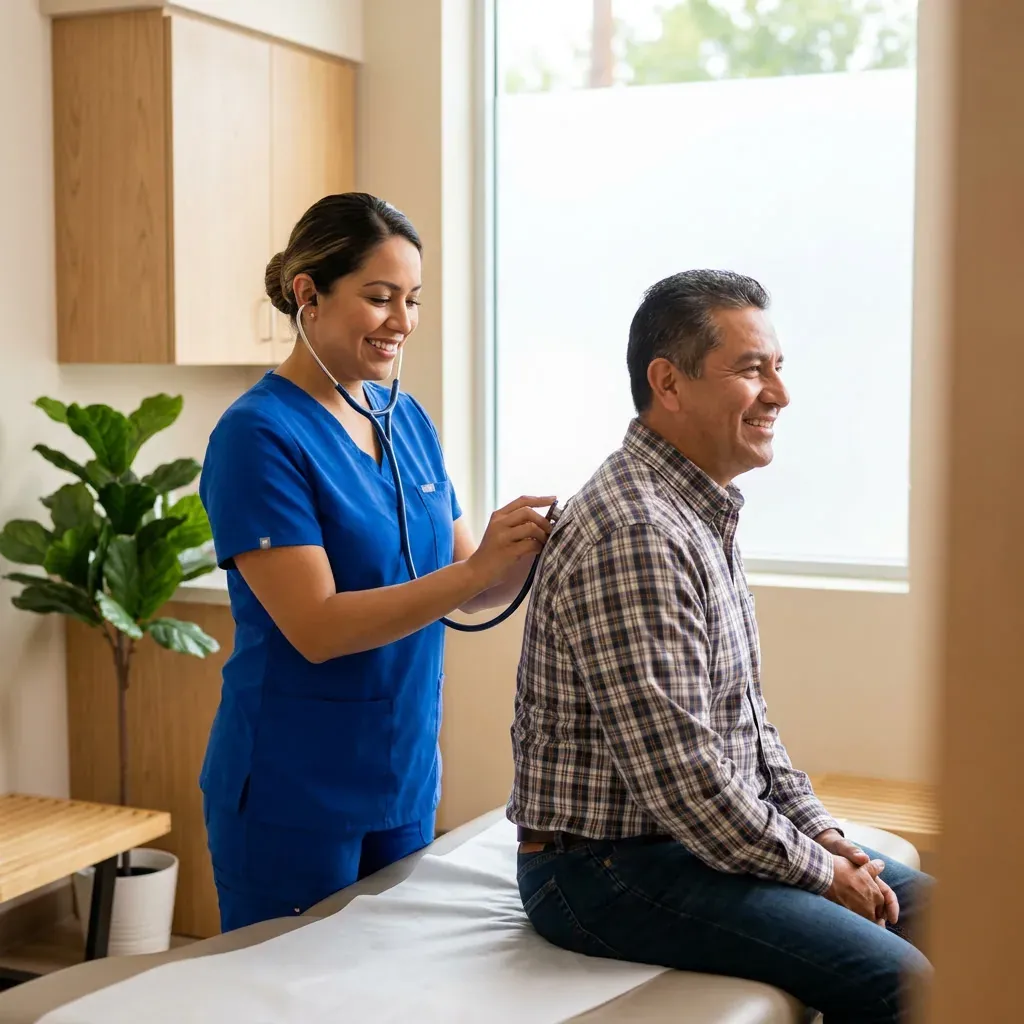
- Physical exam and history: heart, lungs, abdomen, spine, reflexes and range of motion, plus the health questionnaire you fill out at check-in.
What should you bring?
A little preparation keeps things moving and saves you a second trip for a missing paper. Bring:
- your current driver's license;
- a list of every medication you take, with name and dose (a photo of the labels works);
- the glasses or contacts you drive with, and hearing aids if you use them;
- if you have insulin-treated diabetes, a heart condition, sleep apnea or another condition being followed, a recent note from your treating provider about your treatment and how well it's controlled.
For insulin-treated diabetes, the FMCSA has a specific form that the clinician managing your diabetes fills out. Ask your doctor for it ahead of time.
High blood pressure or diabetes? How to get ready
Take your medications exactly as usual. It sounds obvious, yet some drivers skip a dose hoping to "look better" on paper, and it usually backfires. A few more tips:
- Take your blood pressure pill the morning of your visit.
- Go easy on coffee and energy drinks beforehand.
- If it's been months since your last checkup, get your blood pressure, sugar and cholesterol checked first so you know where your numbers stand.
MedlinePlus explains high blood pressure and how it's managed in plain language.
Why do some drivers get a card for less than two years?
A medical certificate can be valid for up to 24 months. When a condition needs monitoring, such as blood pressure that is elevated but still within the allowed range, the standards call for a shorter certificate, sometimes one year or less. That isn't a failed exam. You'll simply be asked to return earlier so the medical team can confirm things are still on track.
Is a drug test part of the DOT physical?
No. The urine sample in the physical looks for sugar, protein and blood, not drugs. DOT drug and alcohol testing is a separate process, usually ordered by your employer. If you need that too, see the clinic's drug and alcohol testing service.
How much does a DOT physical cost?
The DOT physical isn't on the current promotional flyers, so ask for the price by phone or at the front desk before you start. The clinic uses self-pay pricing and takes cash, debit and credit cards. Other current deals are on the promotions page, and those prices can change.
Getting your DOT physical in north Houston
You'll find Clínica Hispana Cruz 2 at 13331 Kuykendahl Rd Ste 128, Houston, TX 77090, close to Champions, Willowbrook, Klein and Greenspoint. The clinic is open every day from 9 AM to 9 PM, weekends included, so you can come before or after a shift. Walk in, or call ahead to reserve a time. There's no charge to park, and the door accommodates wheelchairs.
For more details, see the DOT exam page or browse all services.
Need medical attention?
We're here to help. Call now to schedule your appointment or visit our clinic without an appointment.
Call now: +1 (281) 789-0484